In progress, Cornerstone Pilates
A studio wants to mark its clients' milestones with something they'll actually keep.
Cornerstone Pilates, the studio I helped my wife found, wants to give clients something at 10 classes, 50, 100 and on up. Not a certificate. Something small enough to live on a key ring. This page is the project as it stands, not a finished case study.
Where it is on 19 October 2026: the brainstorms are done, the concepts are rendered, and nothing is printed. I'm publishing it unfinished on purpose. Most work looks like this for a long time before it looks like a case study.
The 30-second version
The question
What do clients already carry or use every day that could hold a quick reminder of their work at the studio, without becoming one more thing to keep?
Where it stands
One first concept, a spine, set aside. Four directions rendered: a bottle for the key ring, a stack for the desk, a plaque for the wall, a chain for the pocket.
What's next
Print a test plate of everything, put the pieces in hands at the studio, and see which ones people keep.
- My role
- Design. I describe each piece and Claude renders it, then I react and describe the next round.
- Worked with
- My wife, who runs the studio, and the studio manager
- Tools
- Claude, for the renders. The 3D printer is next.
- Context
- Cornerstone Pilates, Jersey City. Ongoing, as of October 2026
The problem
Someone who comes to class twice a week passes 100 classes in a year. The studio wanted a way to mark that, and a reason to look forward to the next number.
We're exploring trinkets: small things to give away when a client reaches a milestone. The hard part isn't making them. It's making something a person is glad to have a year later.
The question
What do clients already carry or use every day that could be a quick reminder of their work here, without adding burden or clutter to their lives?
What I noticed
There were no sketches. There were conversations: my wife, the studio manager and me, talking through what clients carry, what sits on their desks, what they'd put on a wall.
The question above came out of those talks, and it changed the project more than any render did. The first concept was already drawn before we had it.
How the renders were made
Every image on this page was made in Claude from my descriptions. I'd describe a piece, look at what came back, and describe the next version. The renders are fast enough to throw away, which is the point.
The first concept: a spine
A tag with the studio mark, and a vertebra for each milestone that clicks into the one before it. Ten classes to 500, cream to deep green. It made sense for Pilates, and it looked good in a render.
It was also something to have, not something to use. It only gets longer, and it doesn't do anything on a key ring except hang there.
Set aside, not thrown out
The colour ramp from cream to green and the idea that the pieces connect both carried into everything that came after.
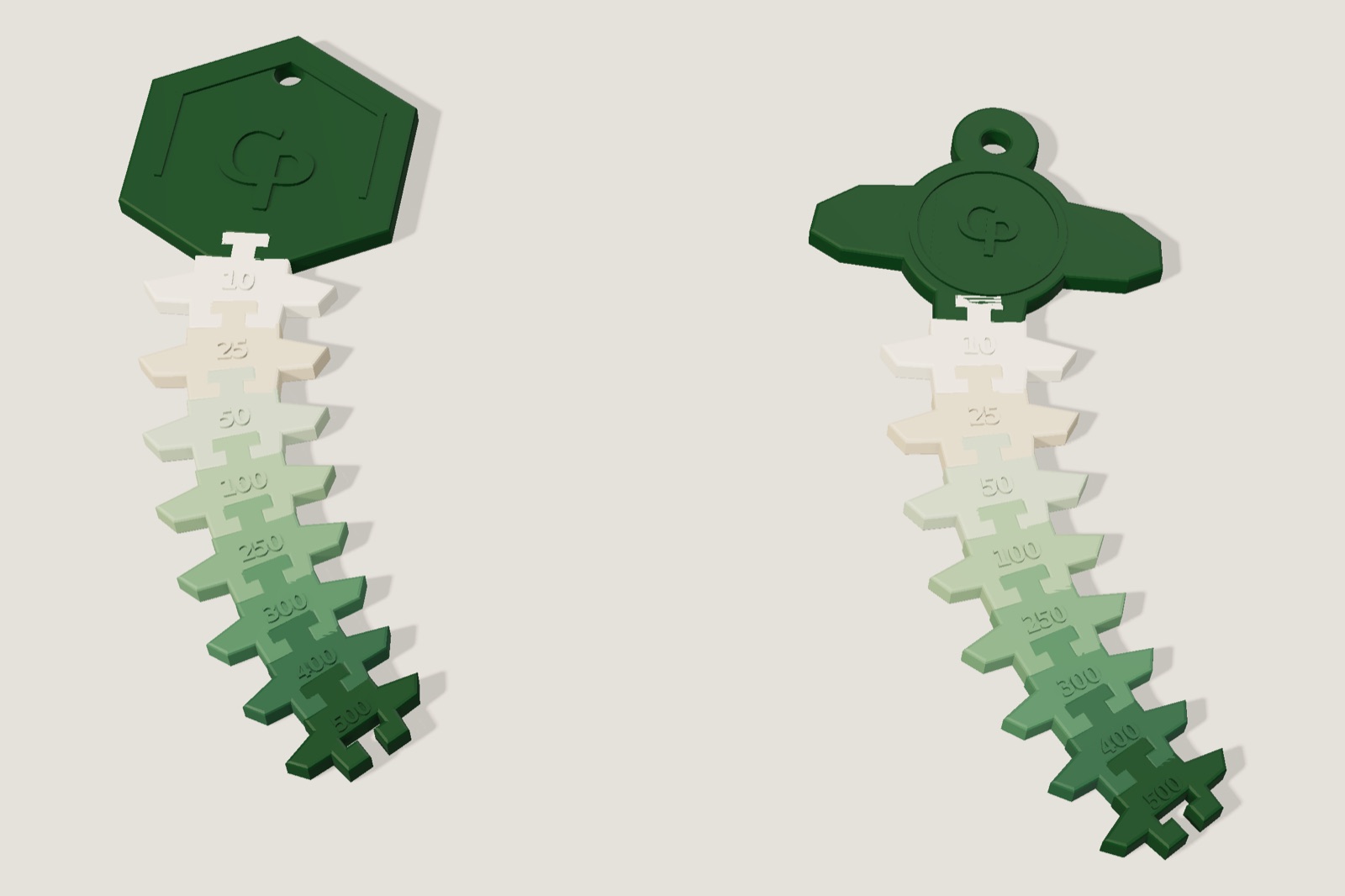
Two tags, the same spine. 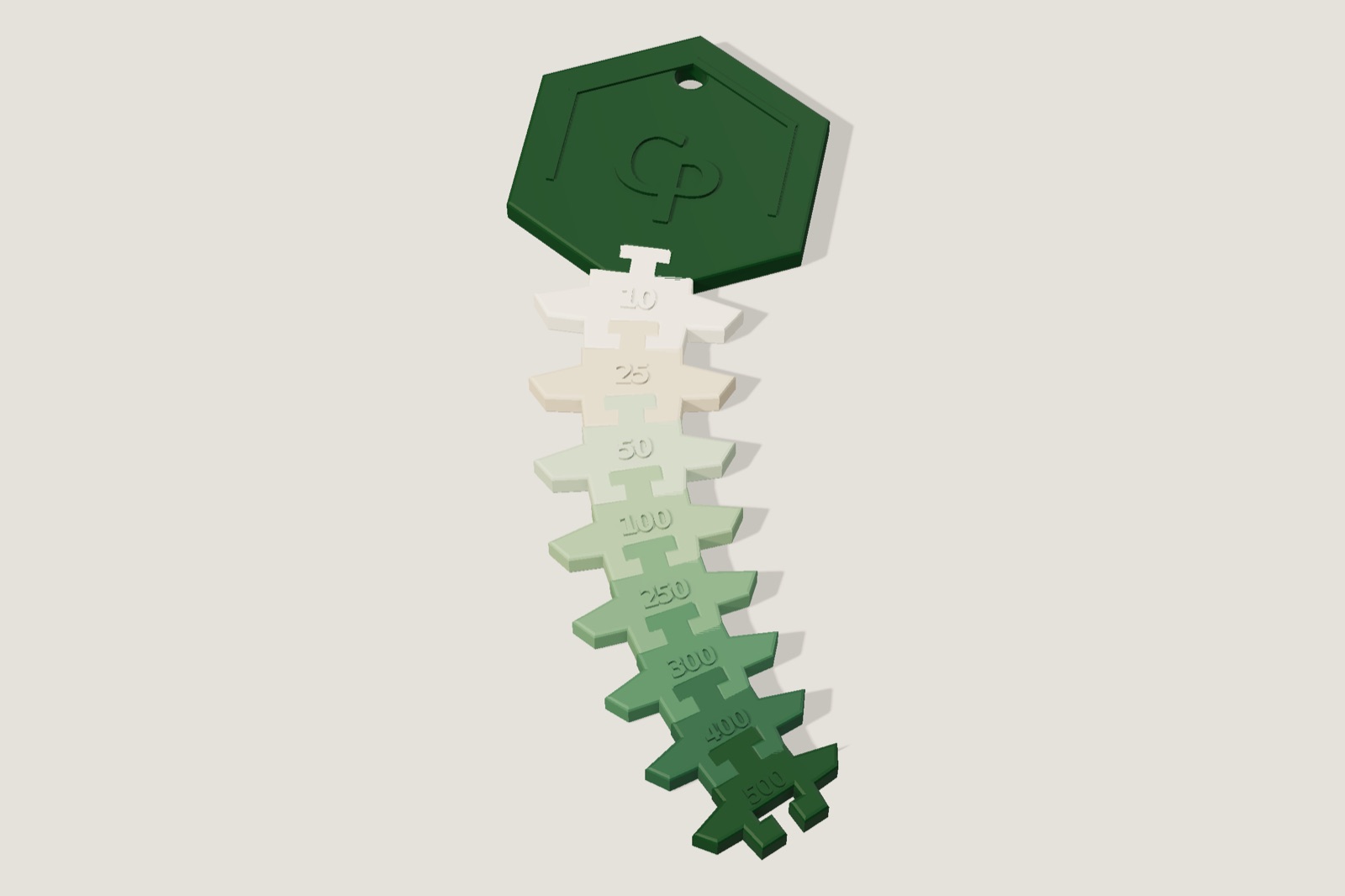
The hexagon, up close. 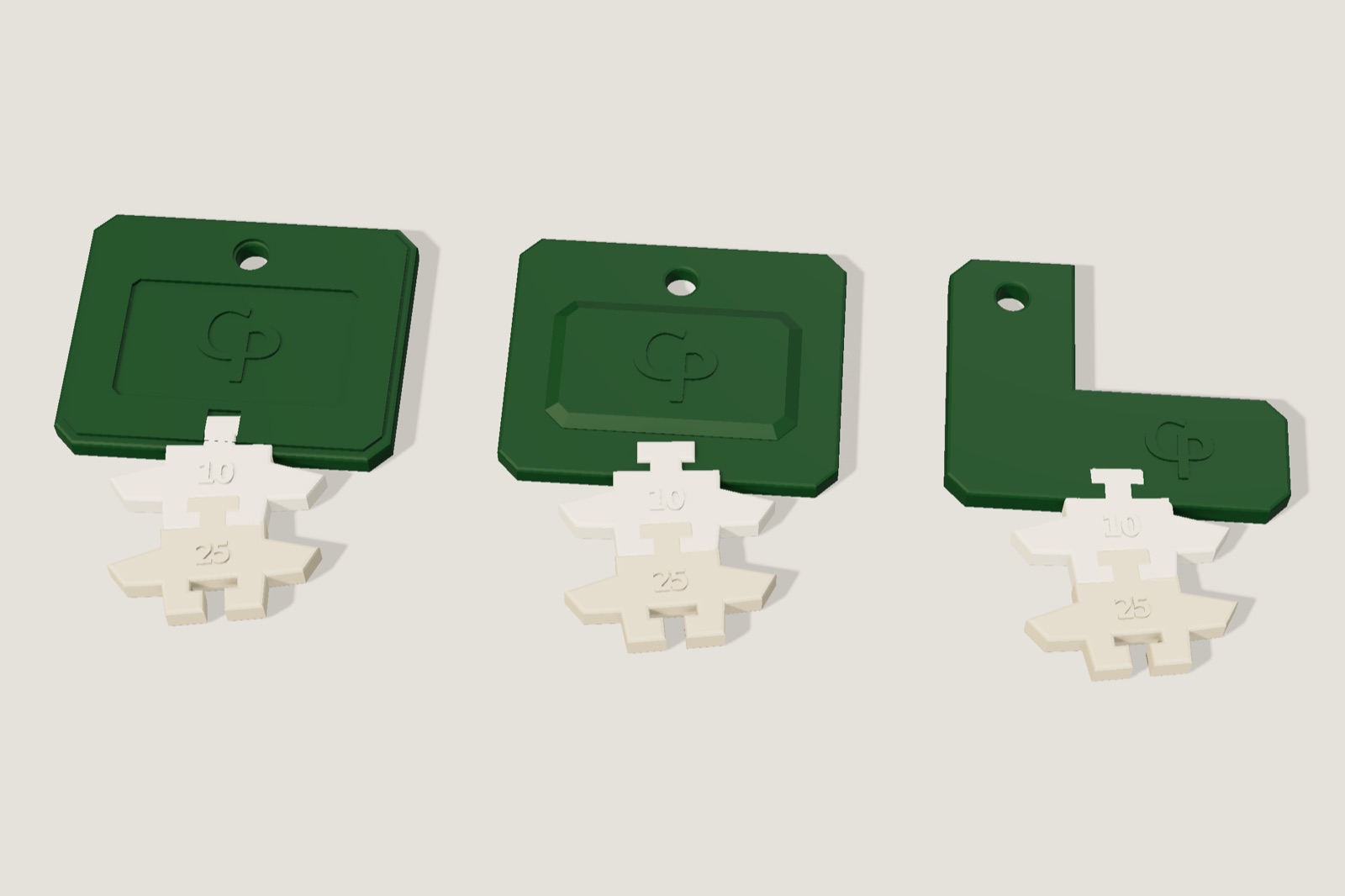
Tag studies. 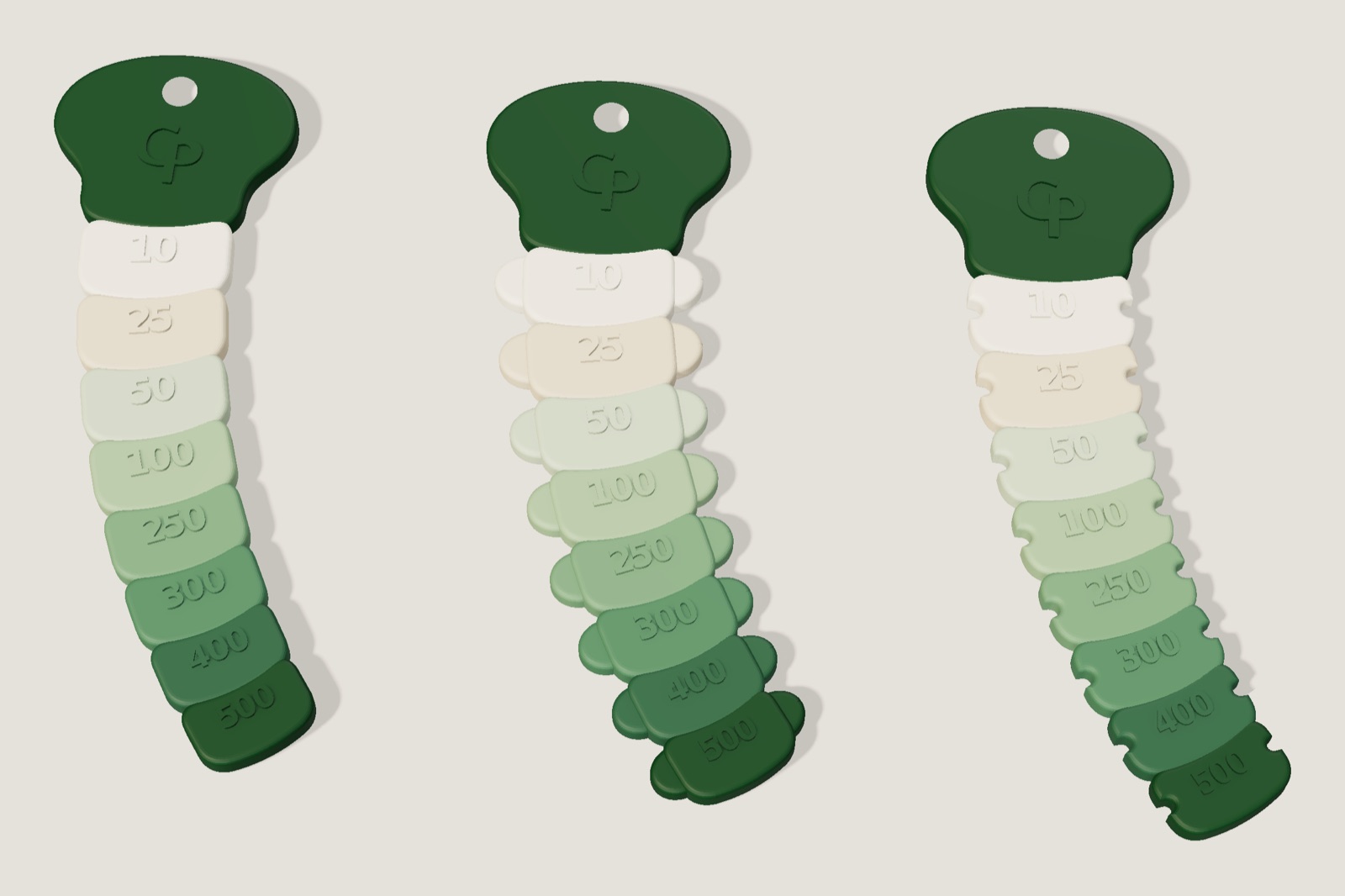
Softer spines. 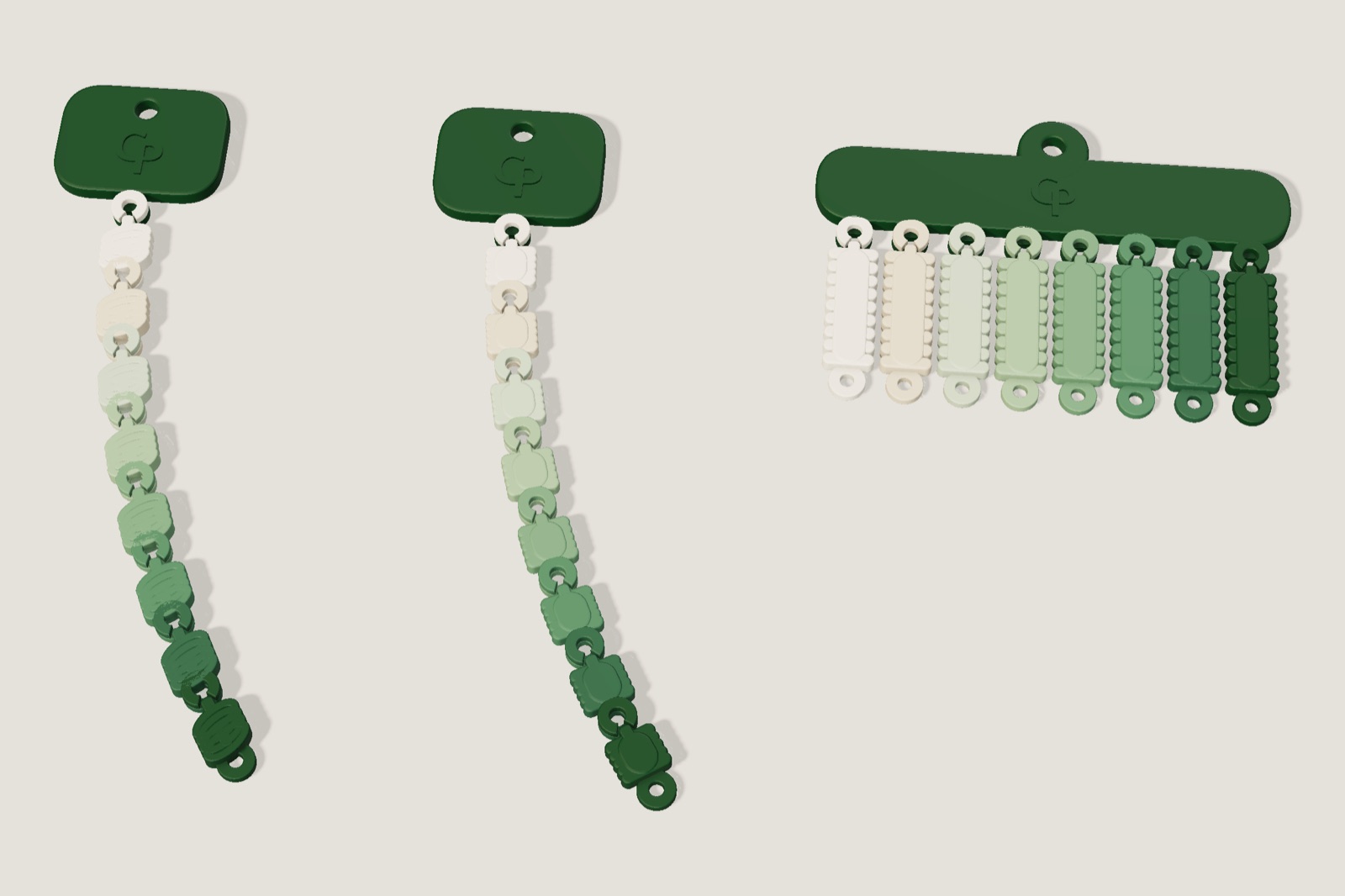
Chains and a bar, still one object that grows. 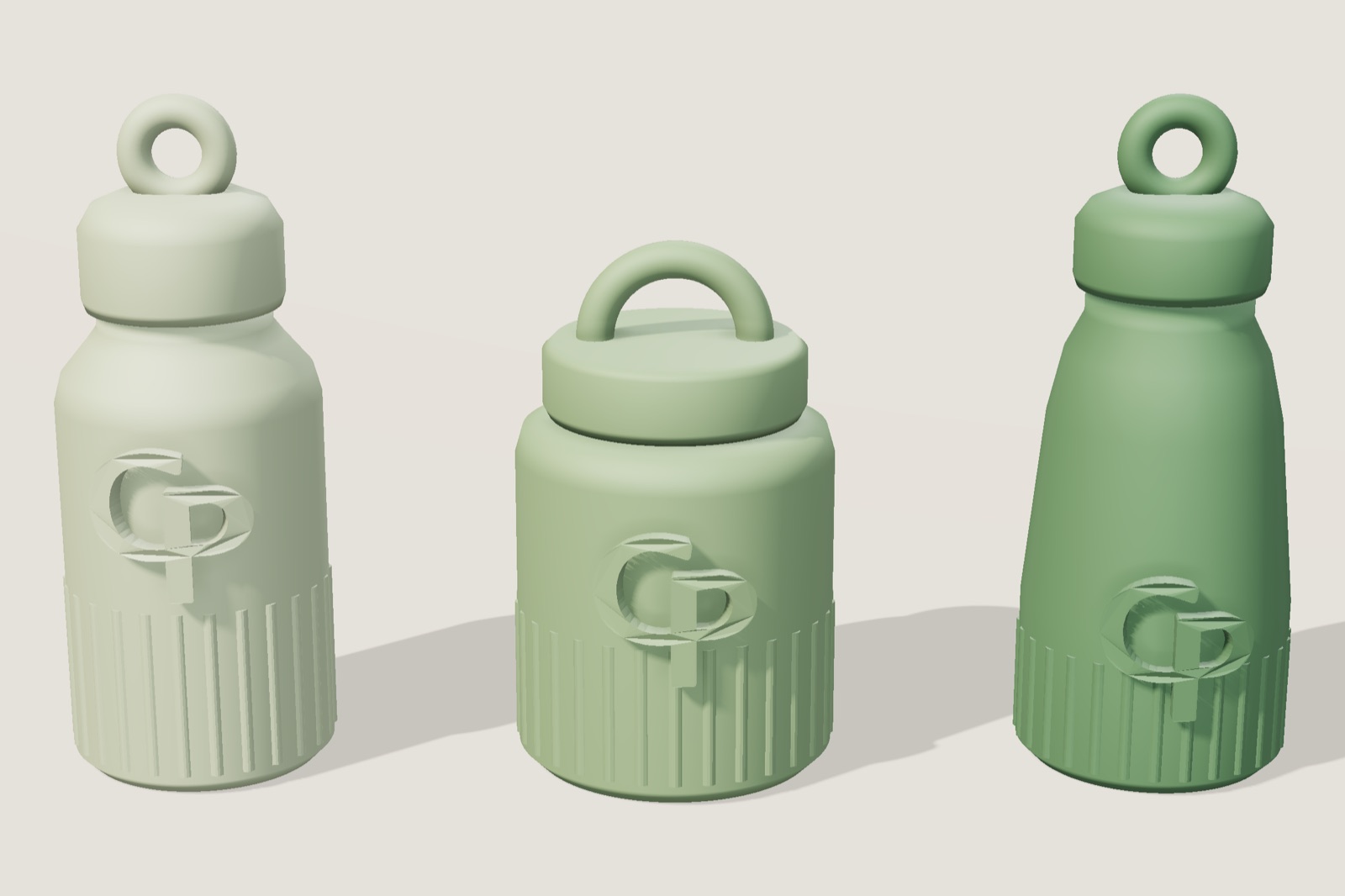
The first bottles. The direction turned here.
Where it is now: four directions
Once we had the question, one object that grows turned into a few small objects that live where people already look.
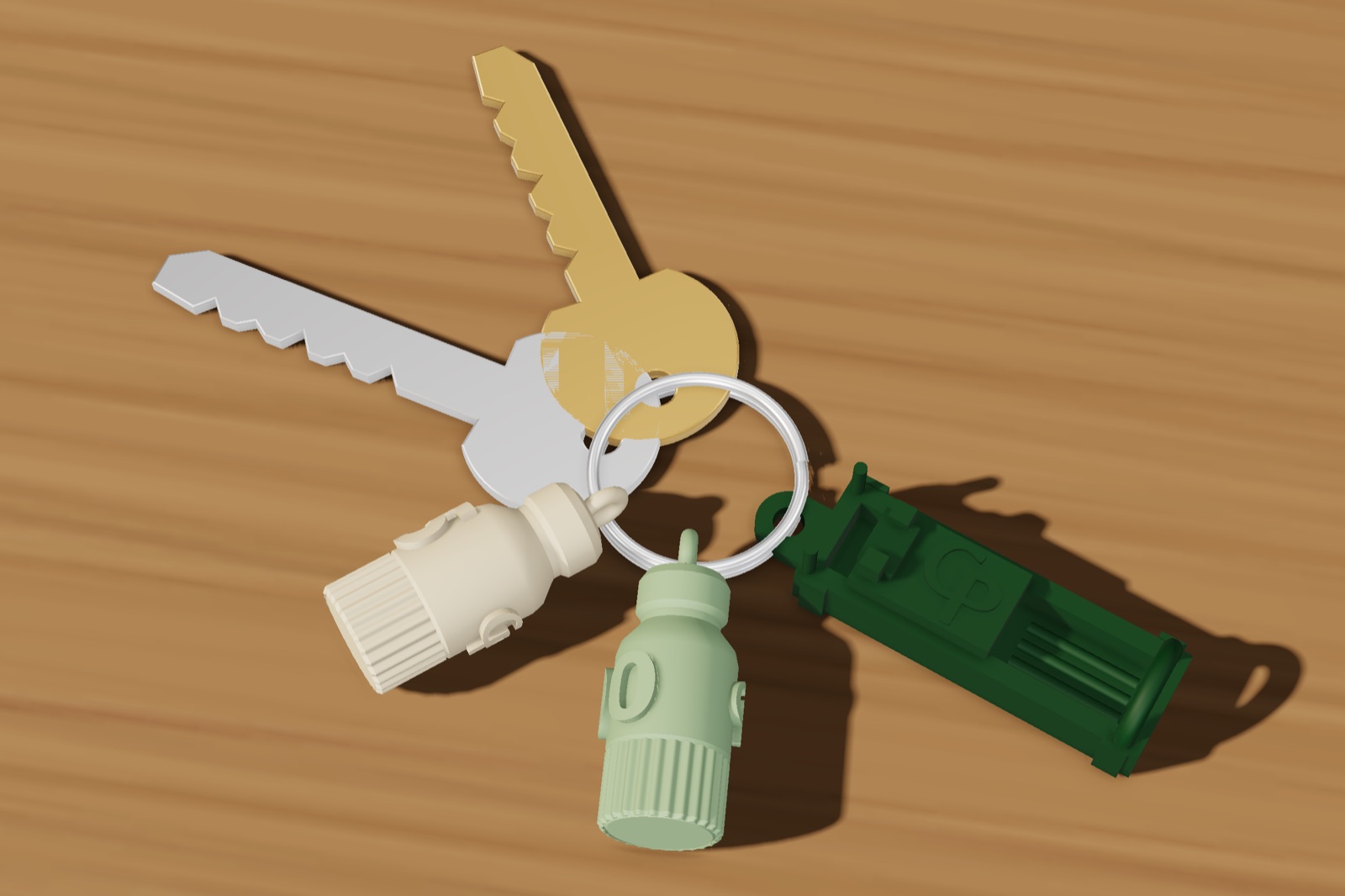
- A bottle for the key ring. One per milestone, the mark on the front and the number on the back, cream at 10 classes to deep green at 400. The 500 is a tiny reformer.
- A stack for the desk. A ribbed ring per milestone, threaded onto a core under a capped lid, so the colours climb as the count does. And a bar with numbered collars that slide on.
- A plaque for the wall. The mark and the studio name, with a numeral tile that swaps out as the count goes up.
- A chain for the pocket. Hinged links, one per milestone, that fold up.
Which of these gets printed first isn't decided. That's what the test plate is for.
Honest scope
Renders, not photos. Sizes, fit, and how a bottle holds up to a year on a key ring are unknowns until the first prints come off the plate.
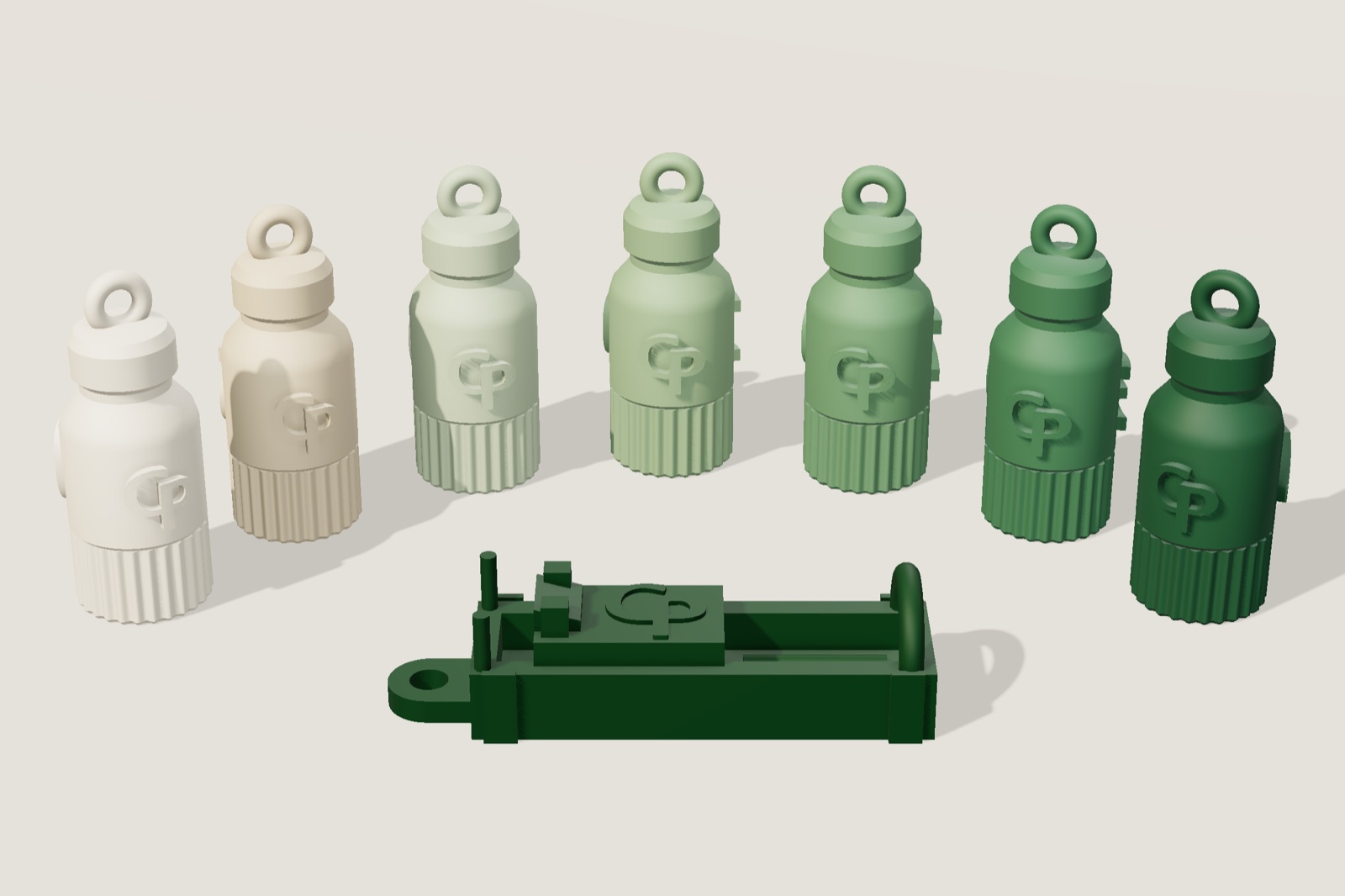
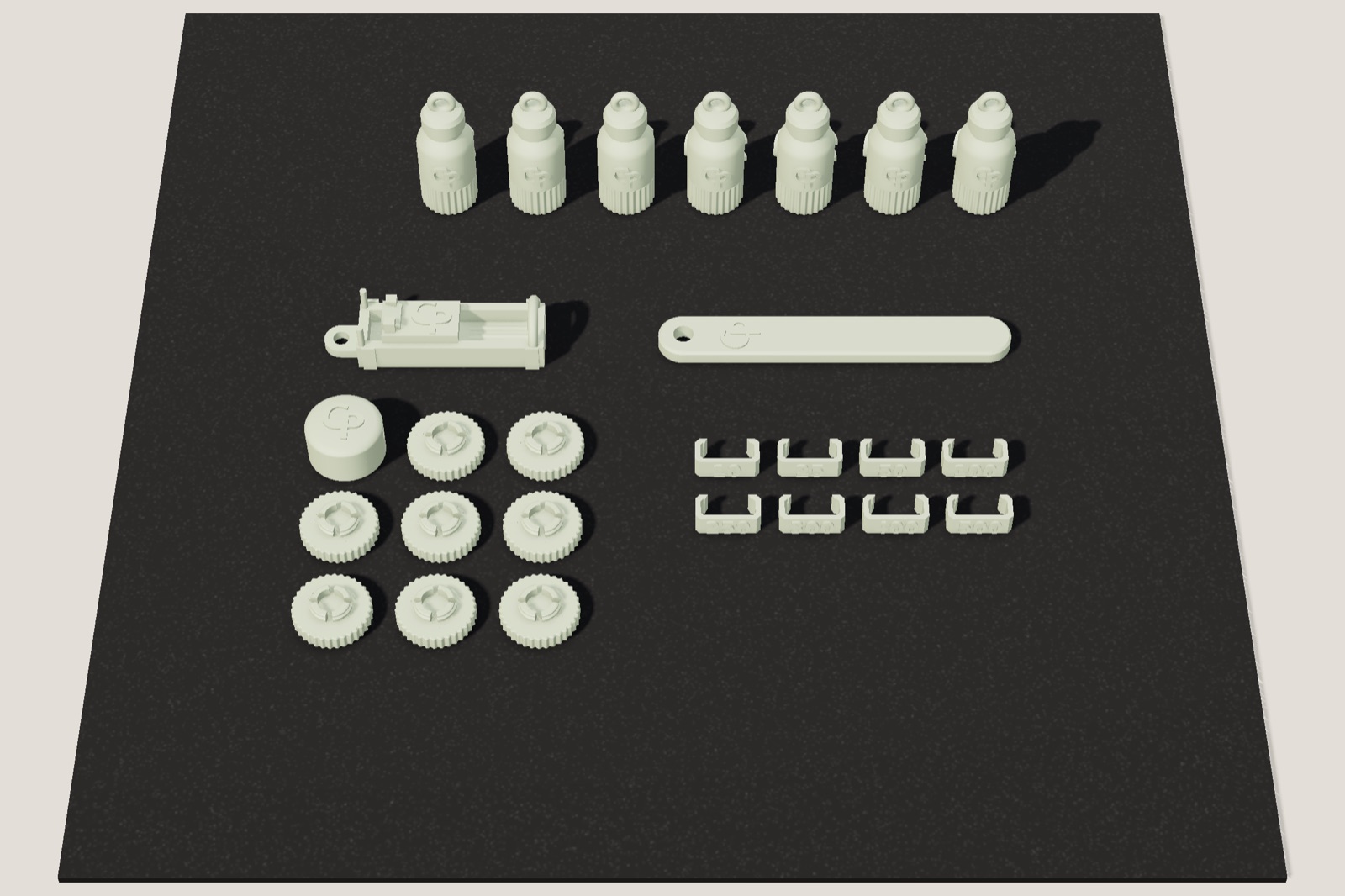
The bottles: seven of them and the reformer. 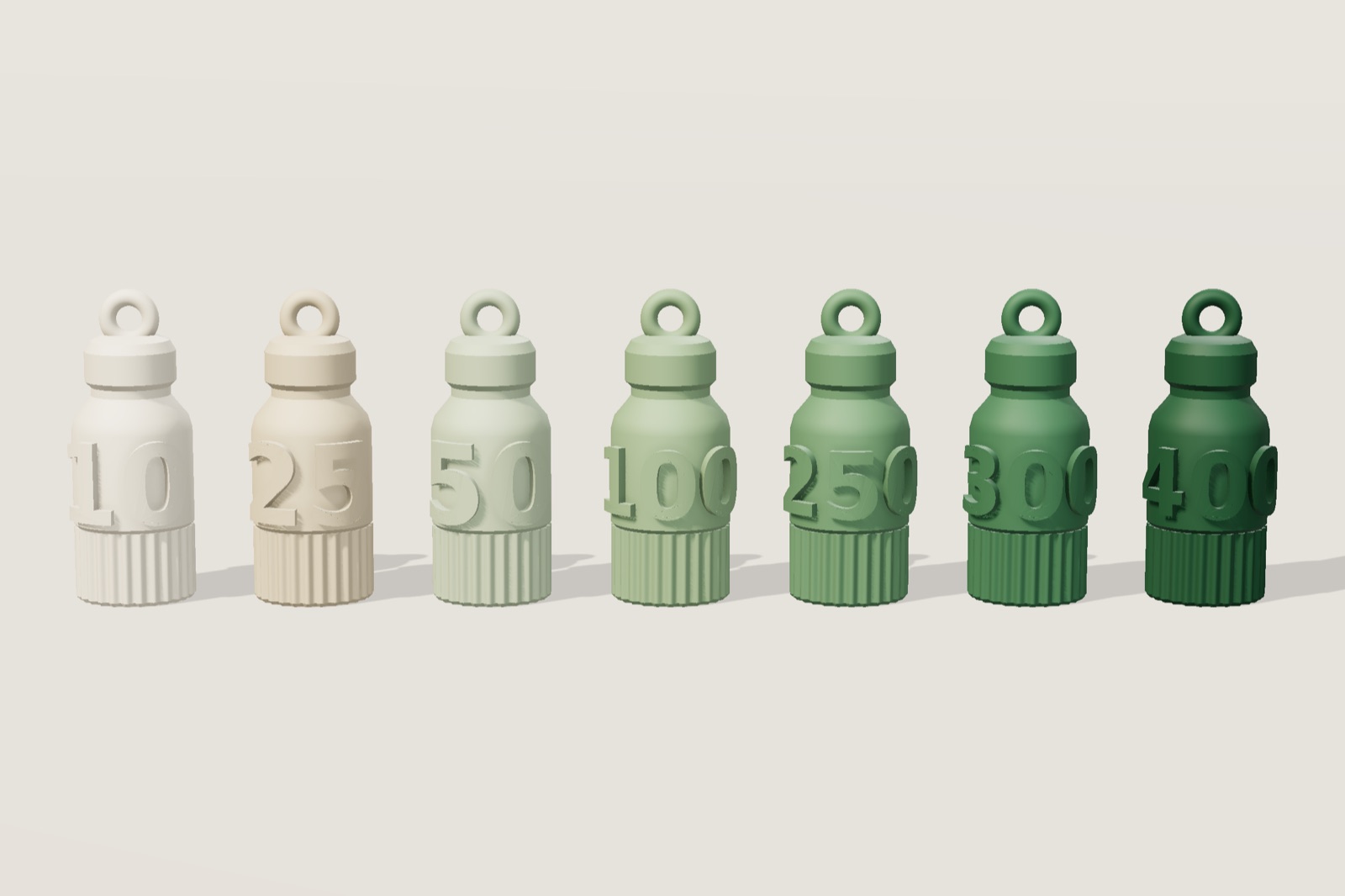
The bottles: the numbers, on the back. 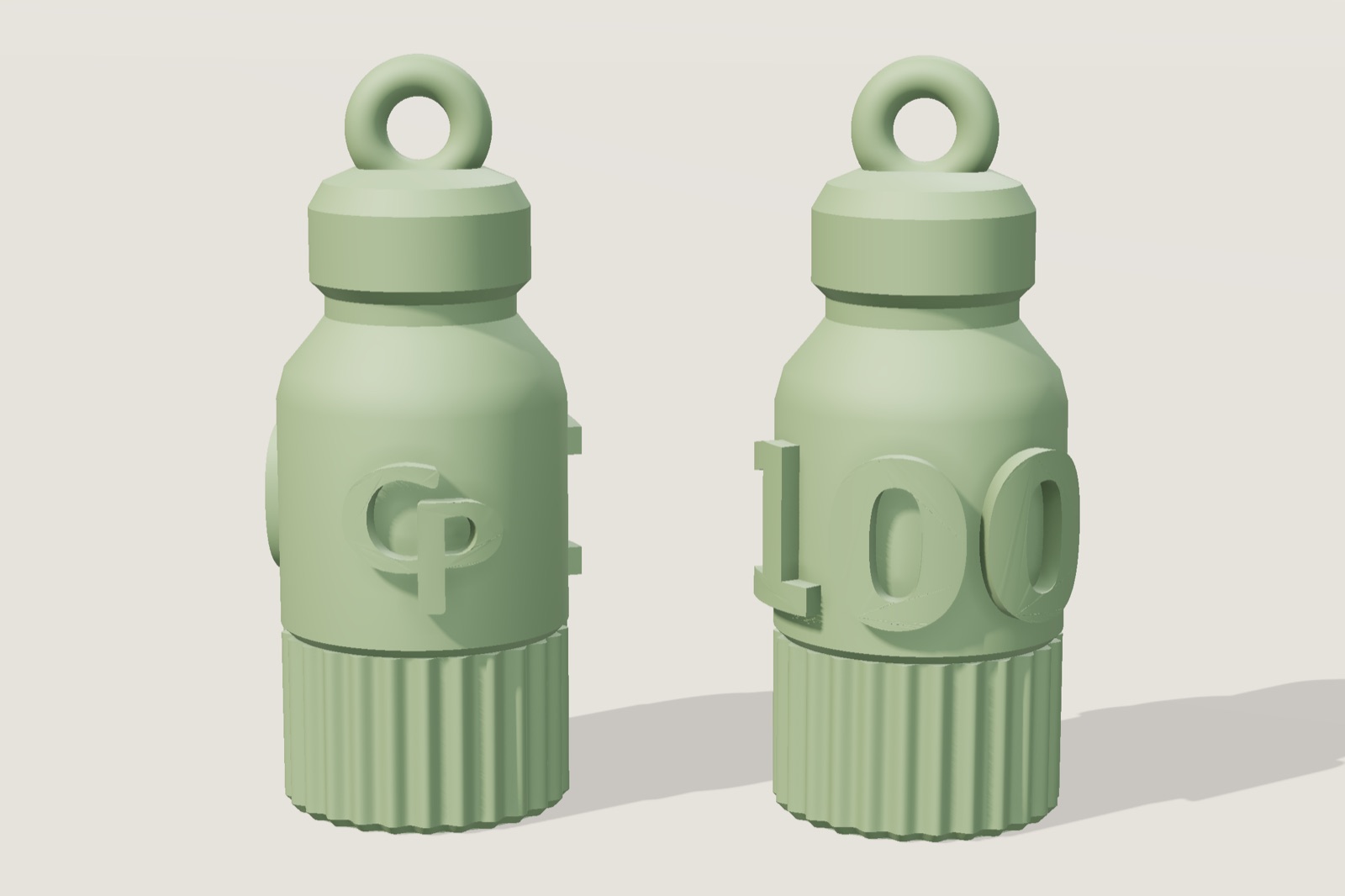
The bottles: front and back. 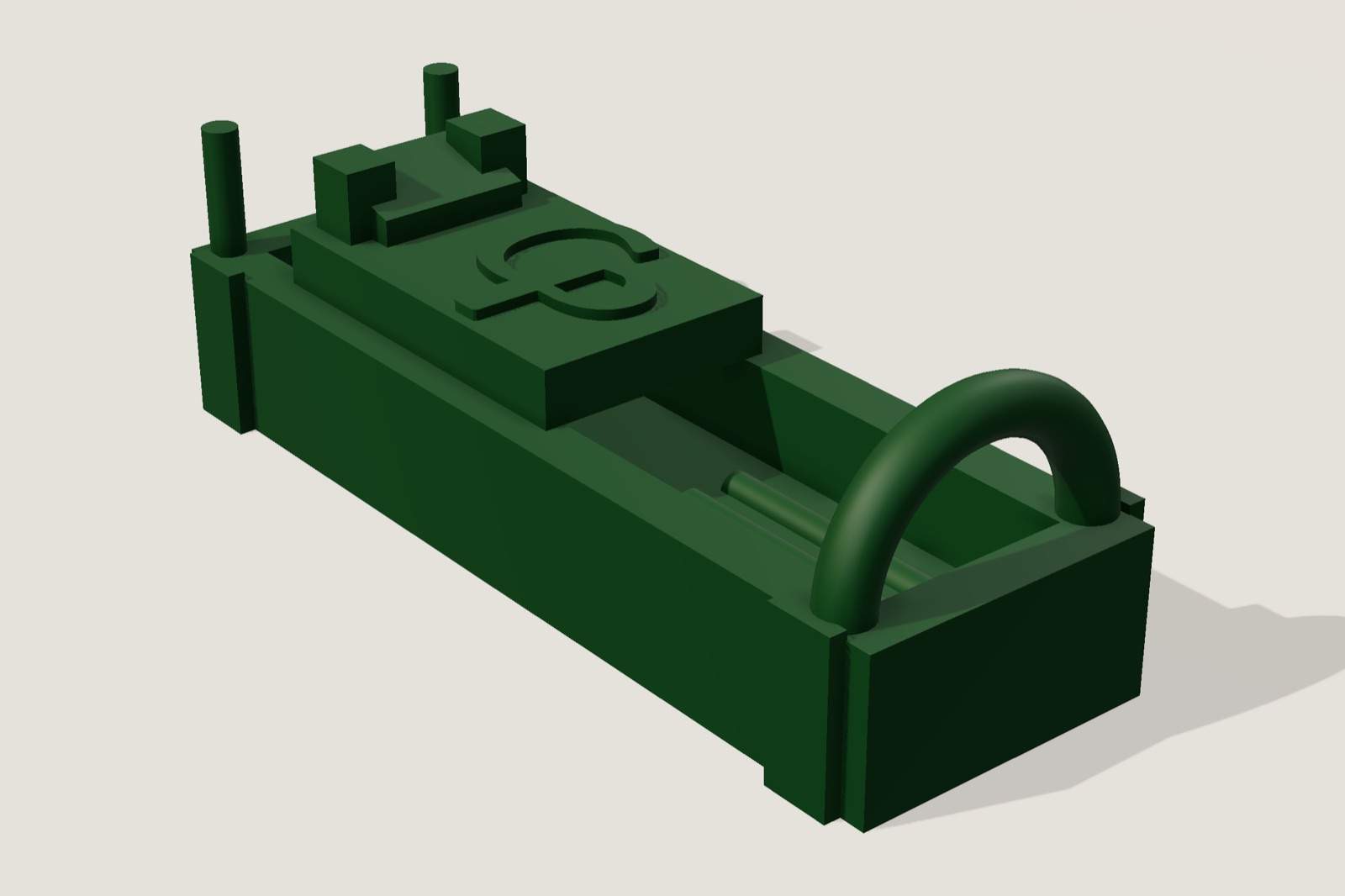
500 classes: the reformer. 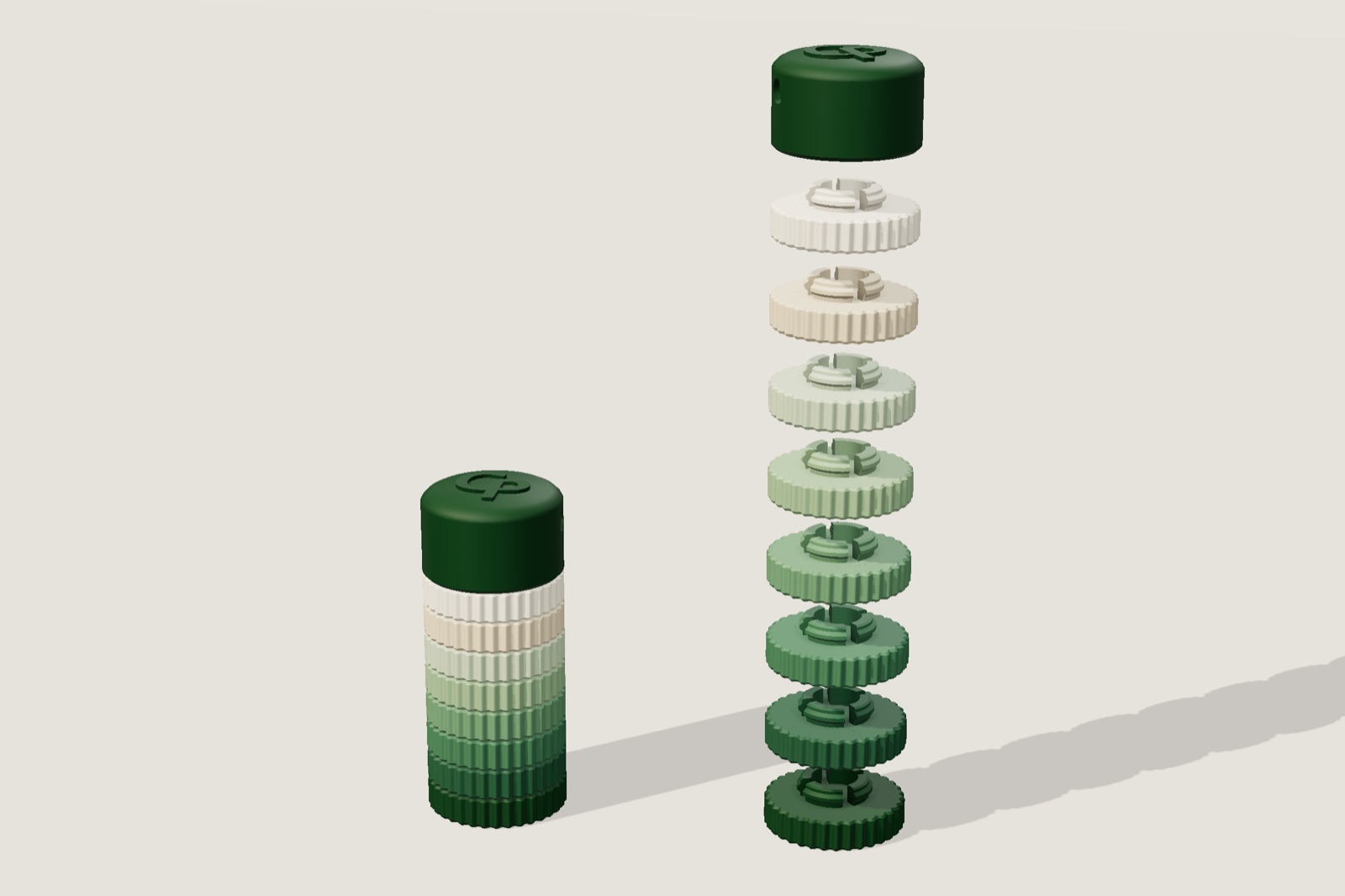
The desk stack, assembled and apart. 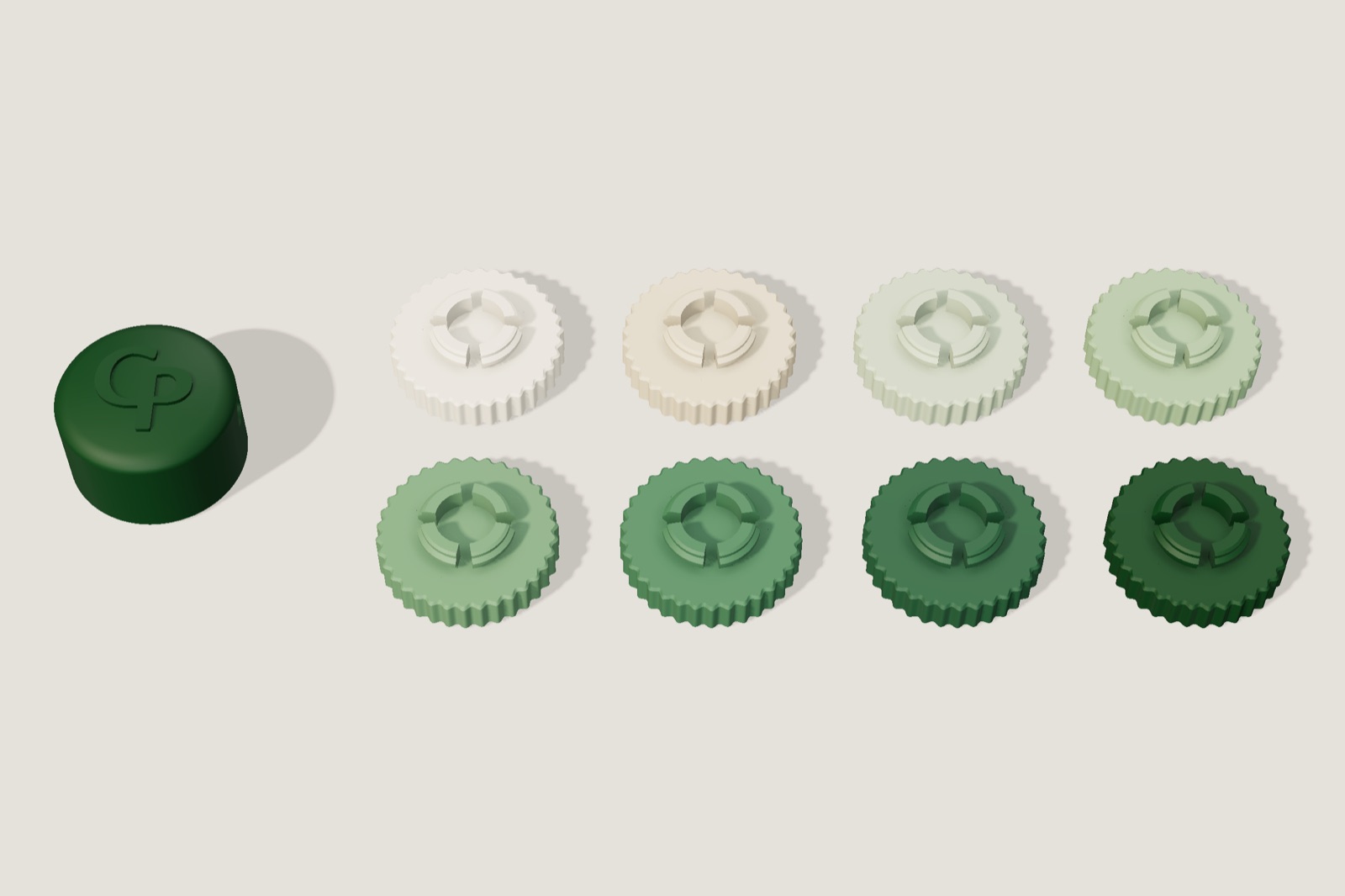
The desk stack: the rings, laid out. 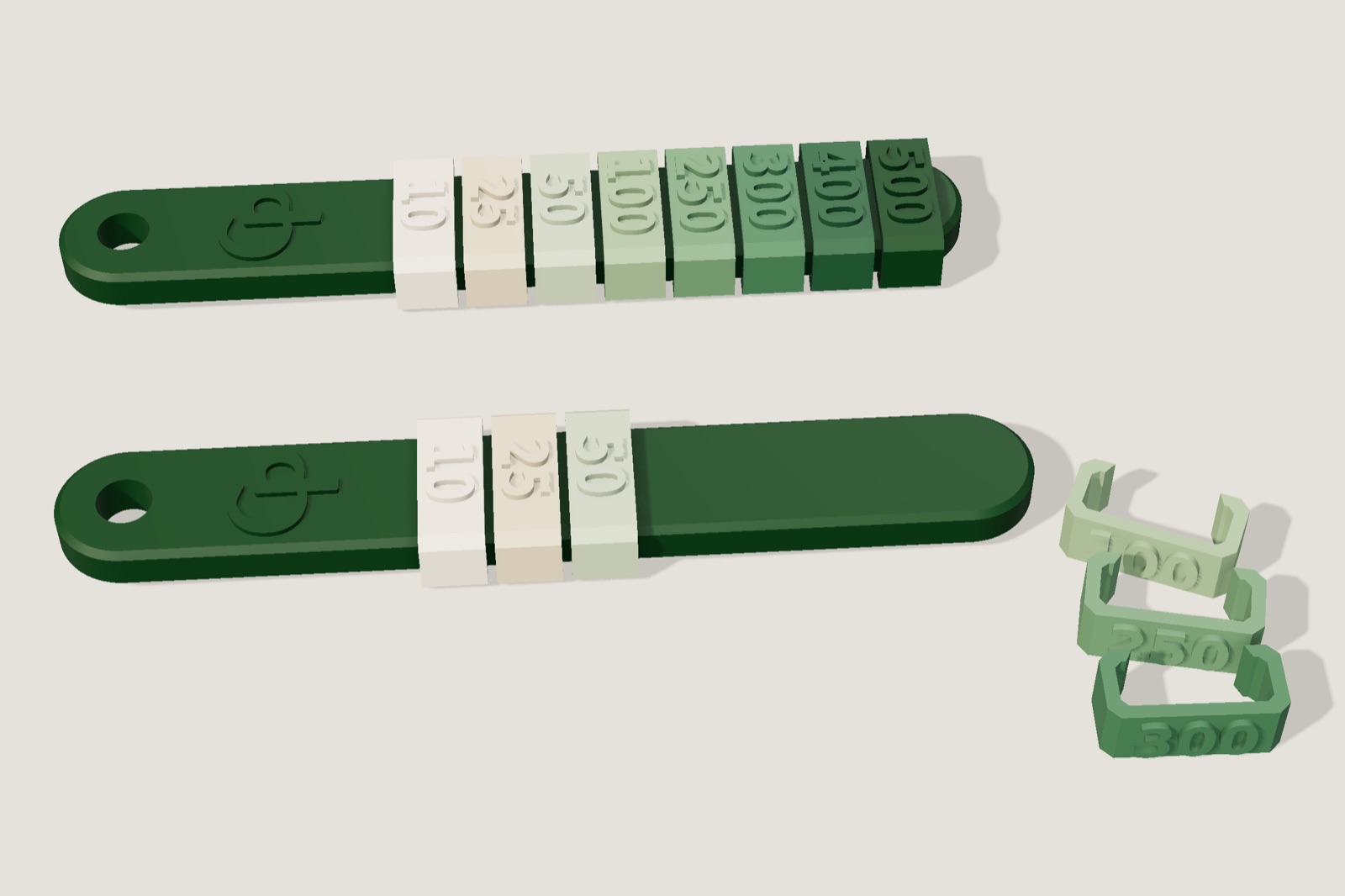
The bar and its collars. 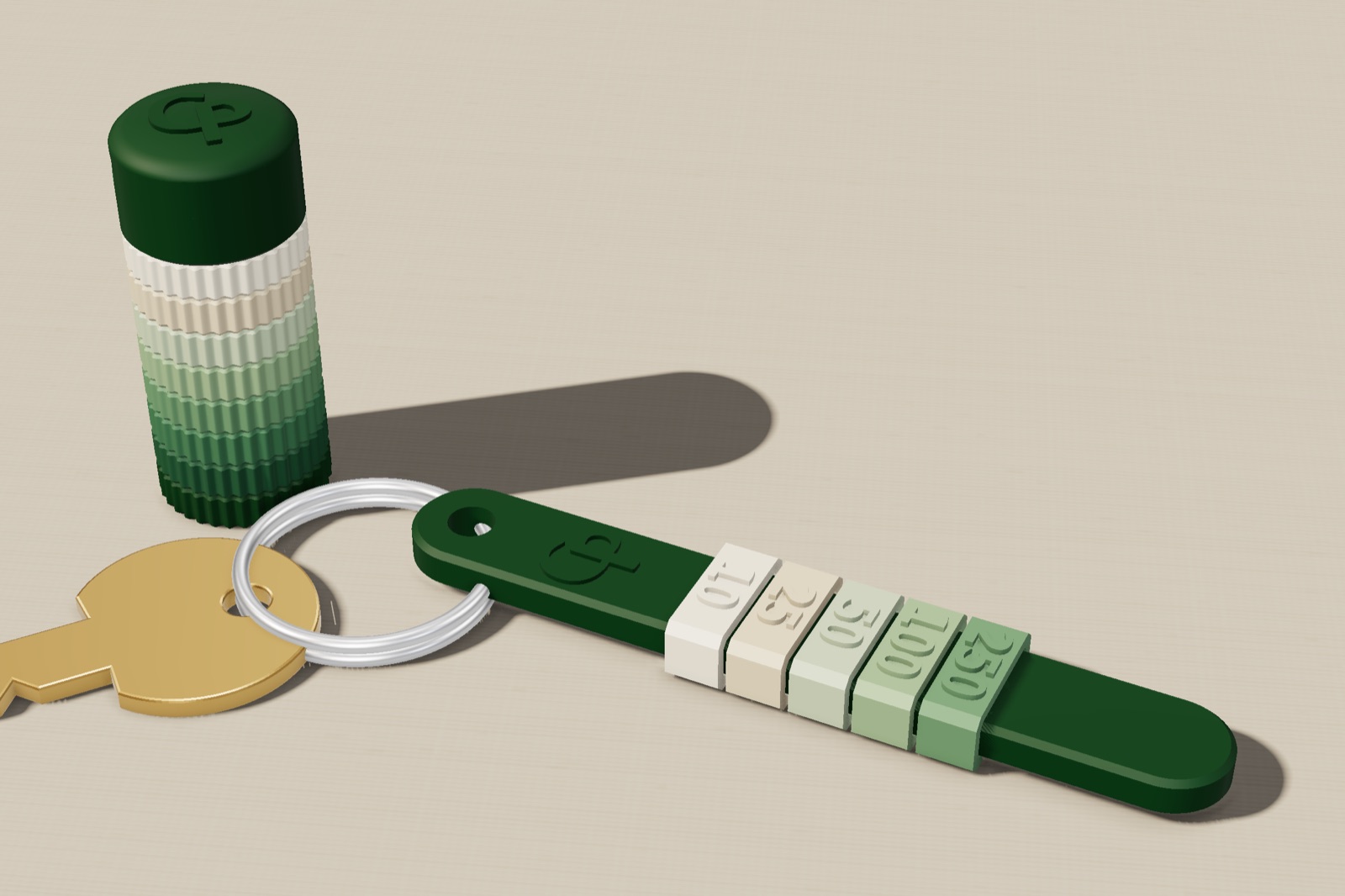
The stack and the bar, on a desk. 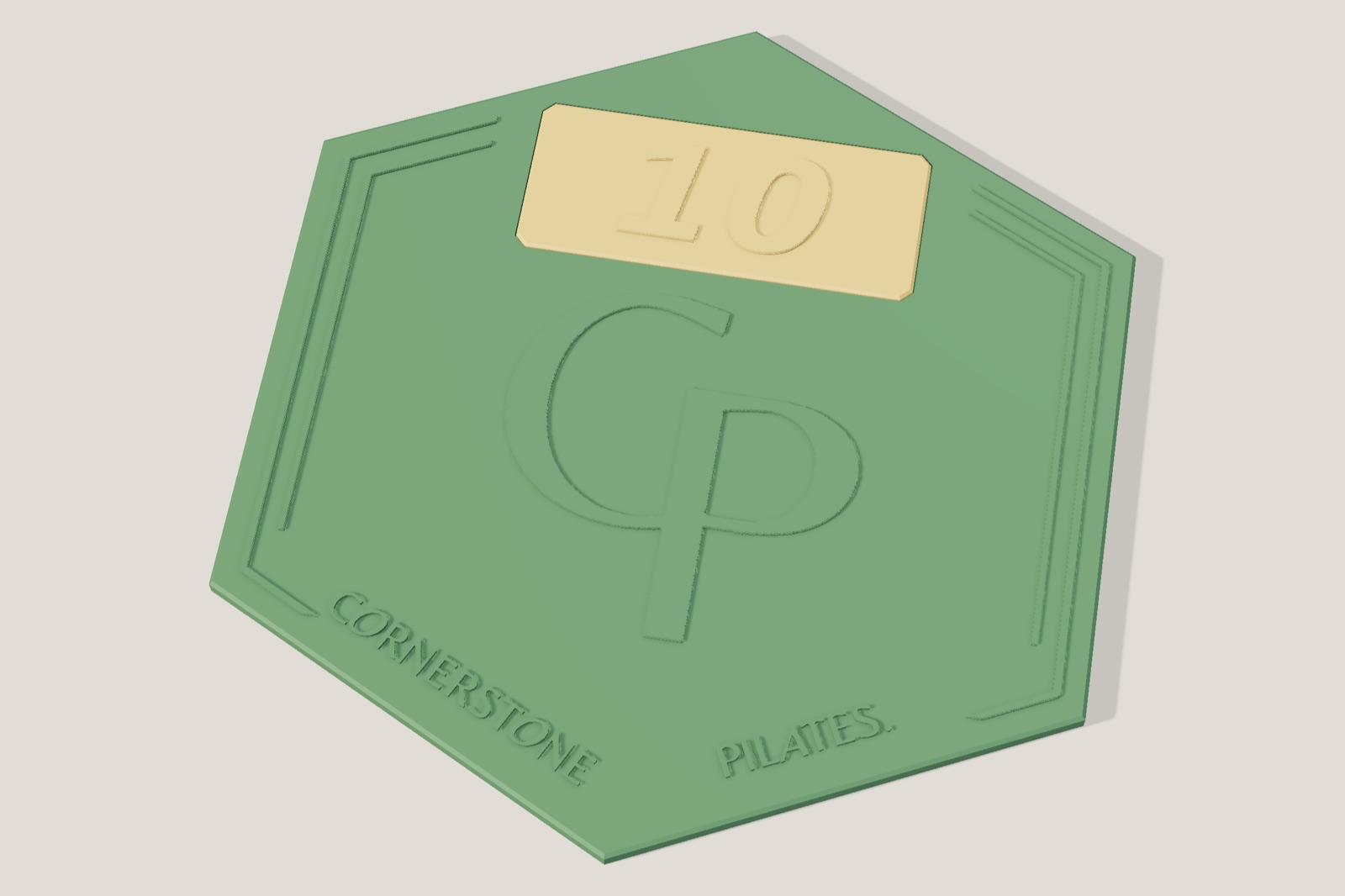
The plaque. 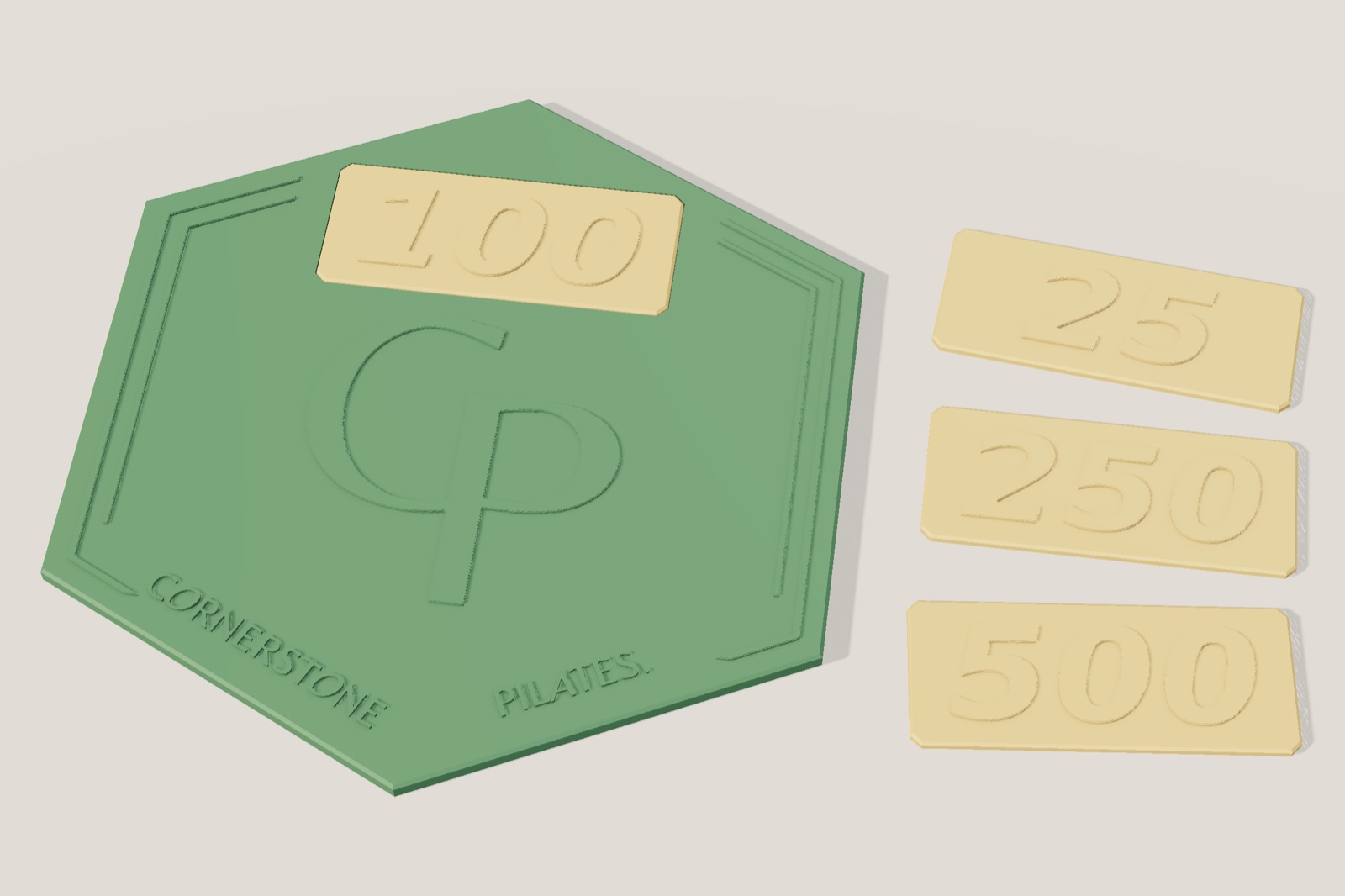
The plaque: tiles swap as the count goes up. 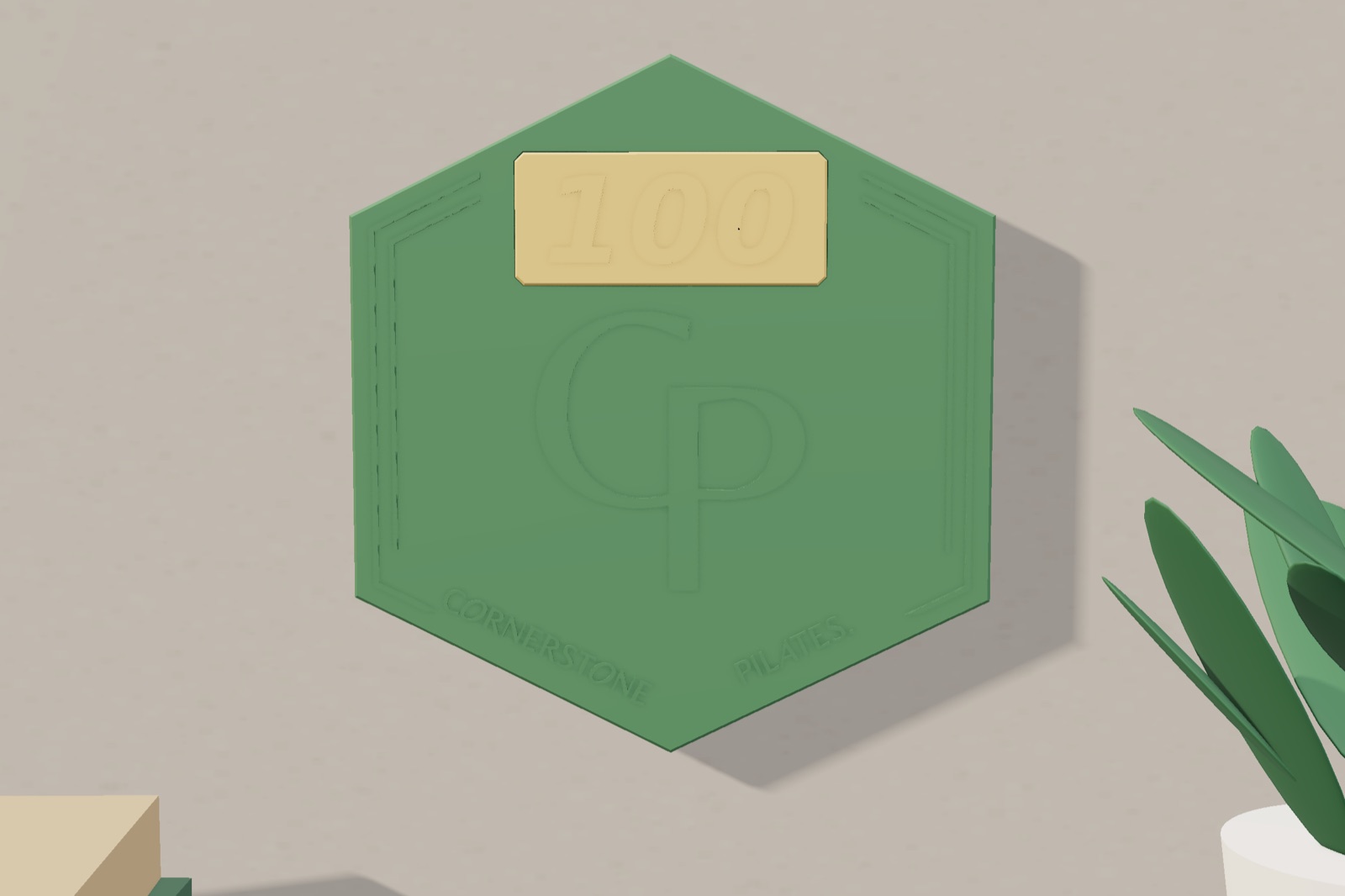
The plaque, on a wall. 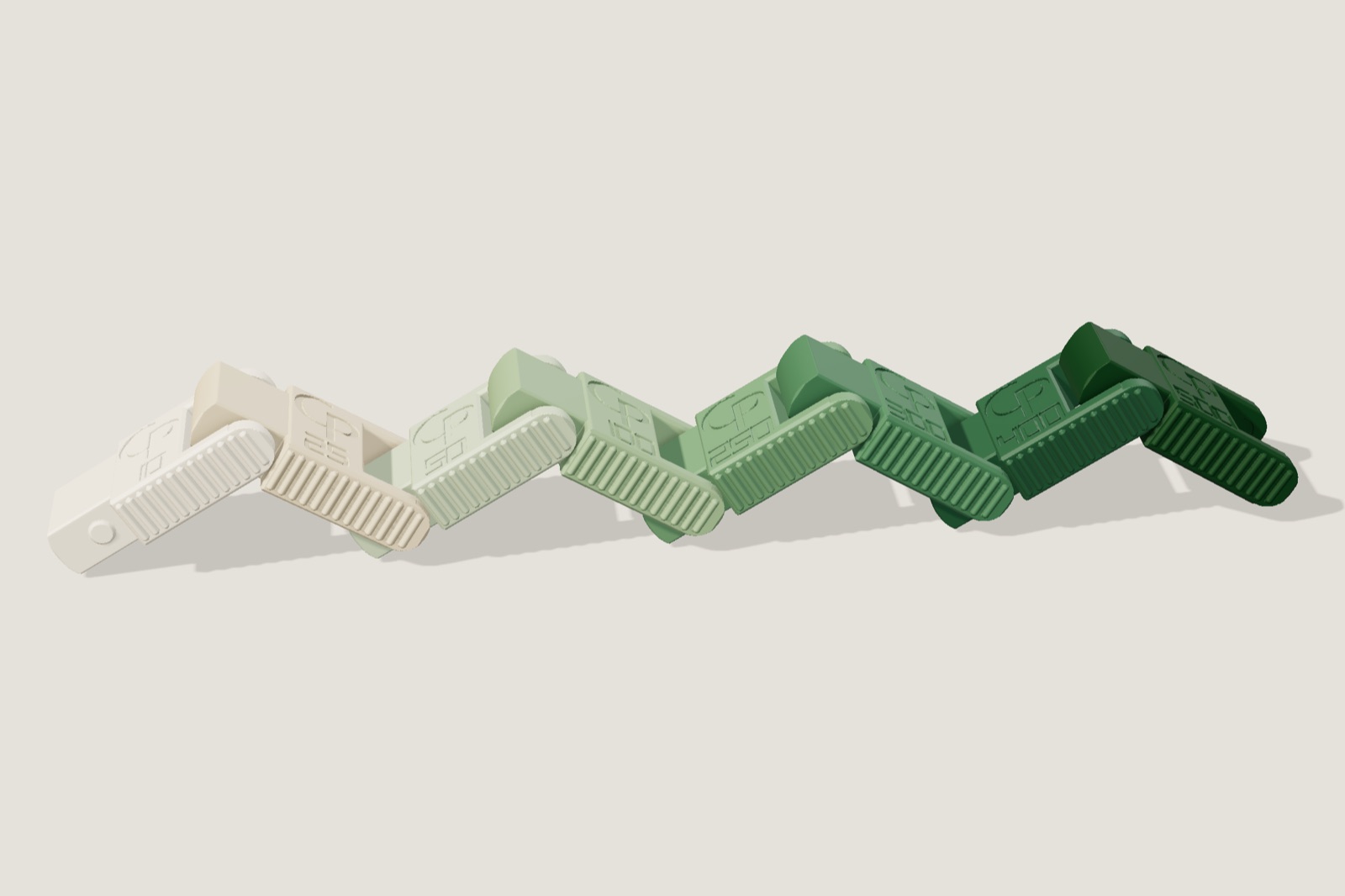
The chain. 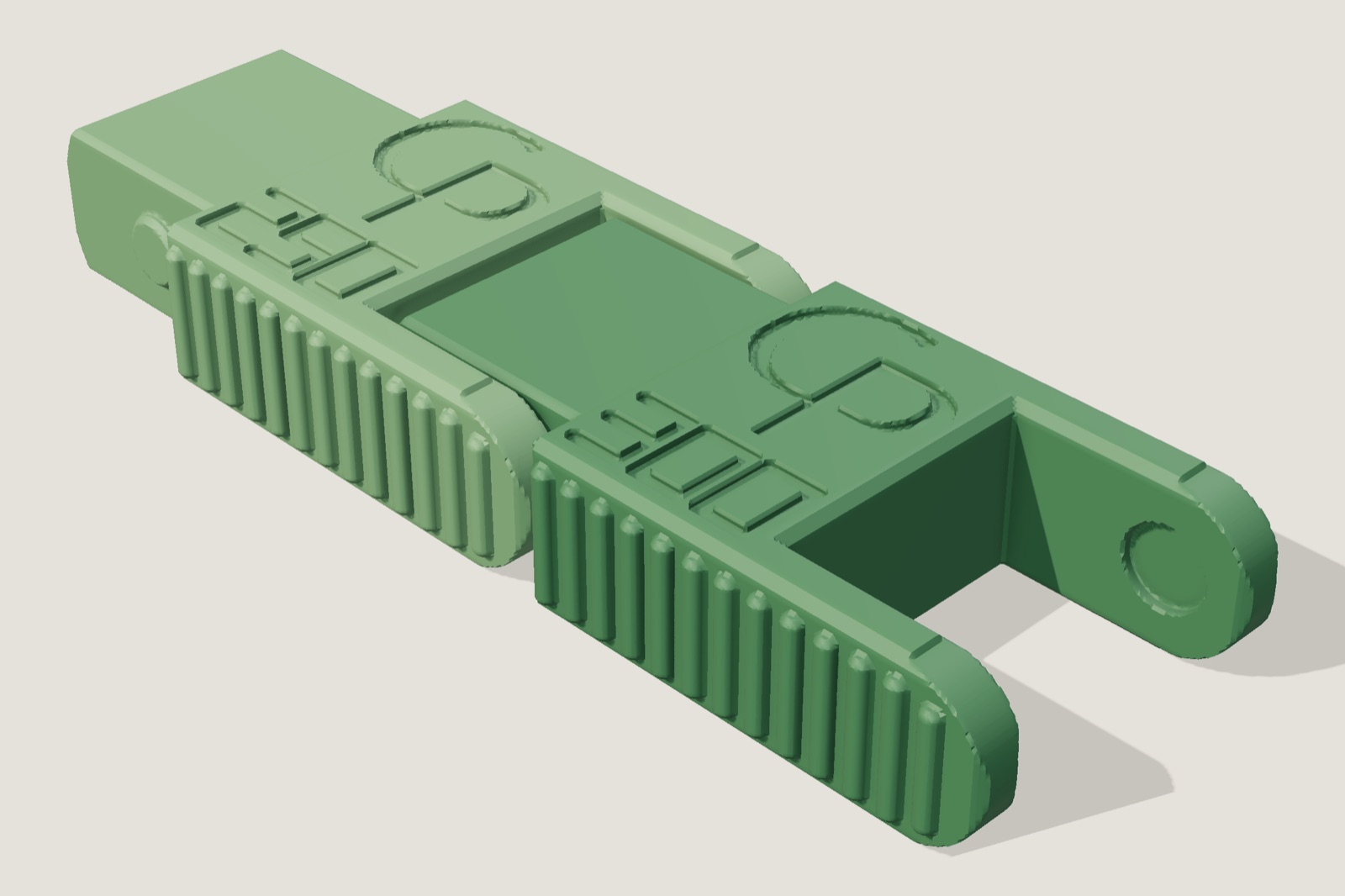
The chain: the hinge. 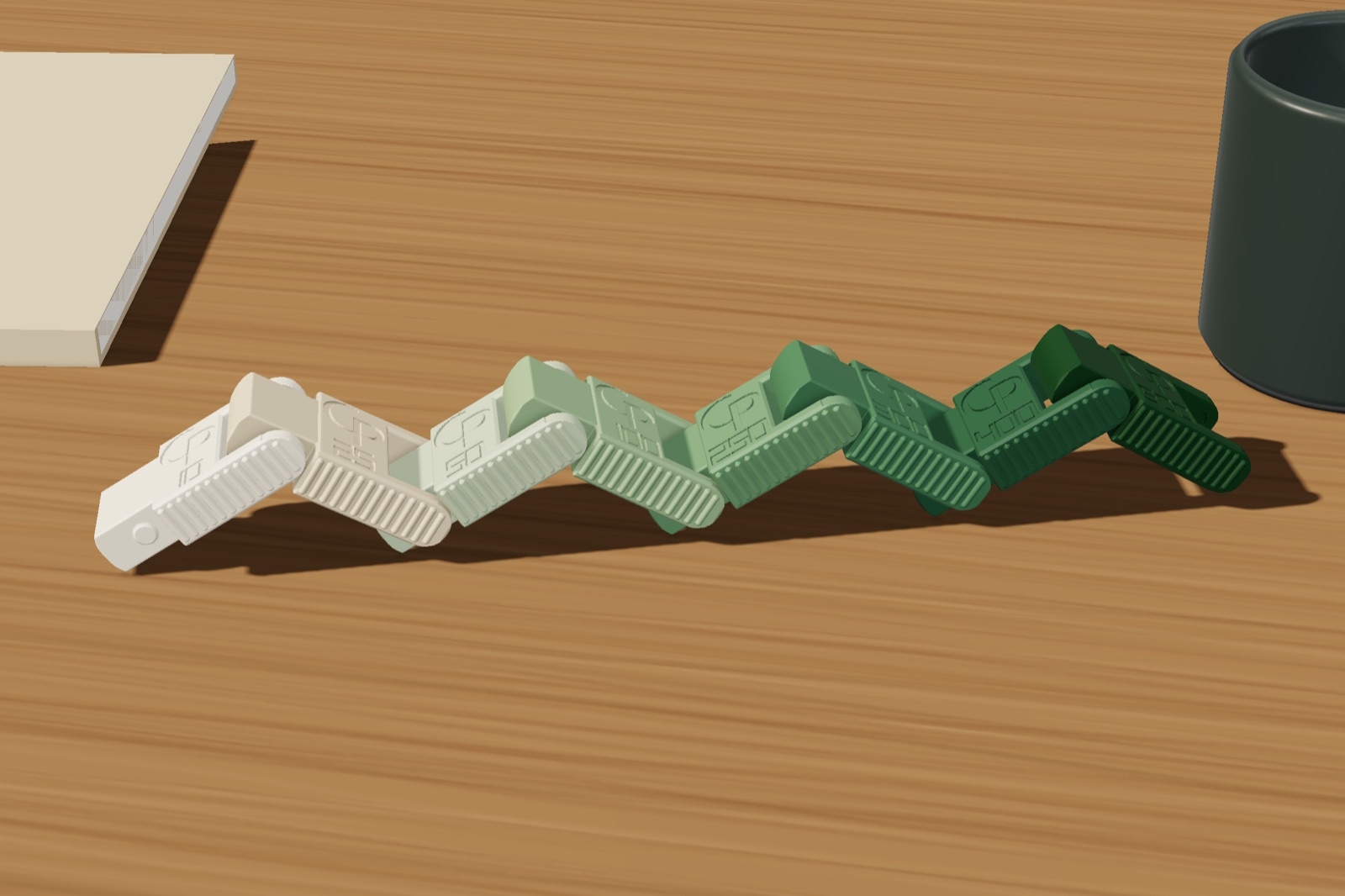
The chain, on a desk.
What changed
Our thinking. We went from designing something to asking why: how it could be something nice to have rather than just something to have.
The spine answered "what should it look like." The bottles, the stack and the plaque answer "where will it live." That's a different question, and it's the one that matters once the novelty wears off.
Still open
The milestones themselves. The renders carry 10, 25, 50, 100, 250, 300, 400 and 500. The final list gets settled with the studio before anything is printed in numbers.
What's next
Print the test plate: one of everything, in one colour. Put the pieces in hands at the studio and watch which ones people keep reaching for. Then pick the set, settle the milestones, and write what happened here.
This page gets updated as that happens, including the parts that don't work.